
Spike passed away last Friday morning.
The ticks got him.
It’s echidna breeding season, and they’re out in numbers. No doubt a prickly affair, perhaps not ours to wonder.
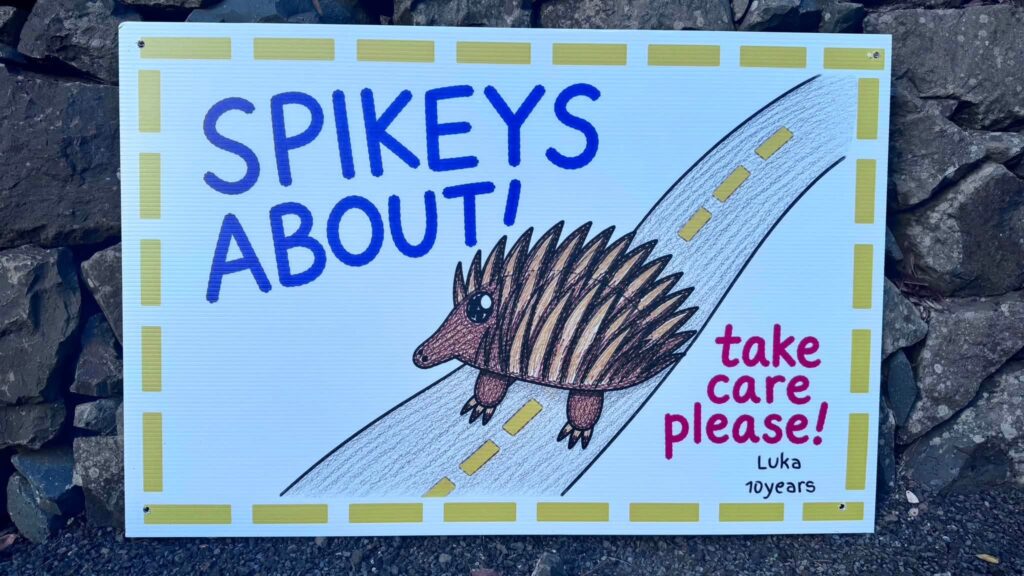
But the warning is out: keep an eye out for wandering and distracted echidnas while driving down country lanes.

Spike had almost 100 ticks on him when the “Snakeman of Jamberoo”, Hugh Marriott of the animal rescue service Illawarra WIRES, came across him three weeks ago. Spike was also riddled with worms. Echidnas normally carry a few ticks, but their immune systems render them harmless.
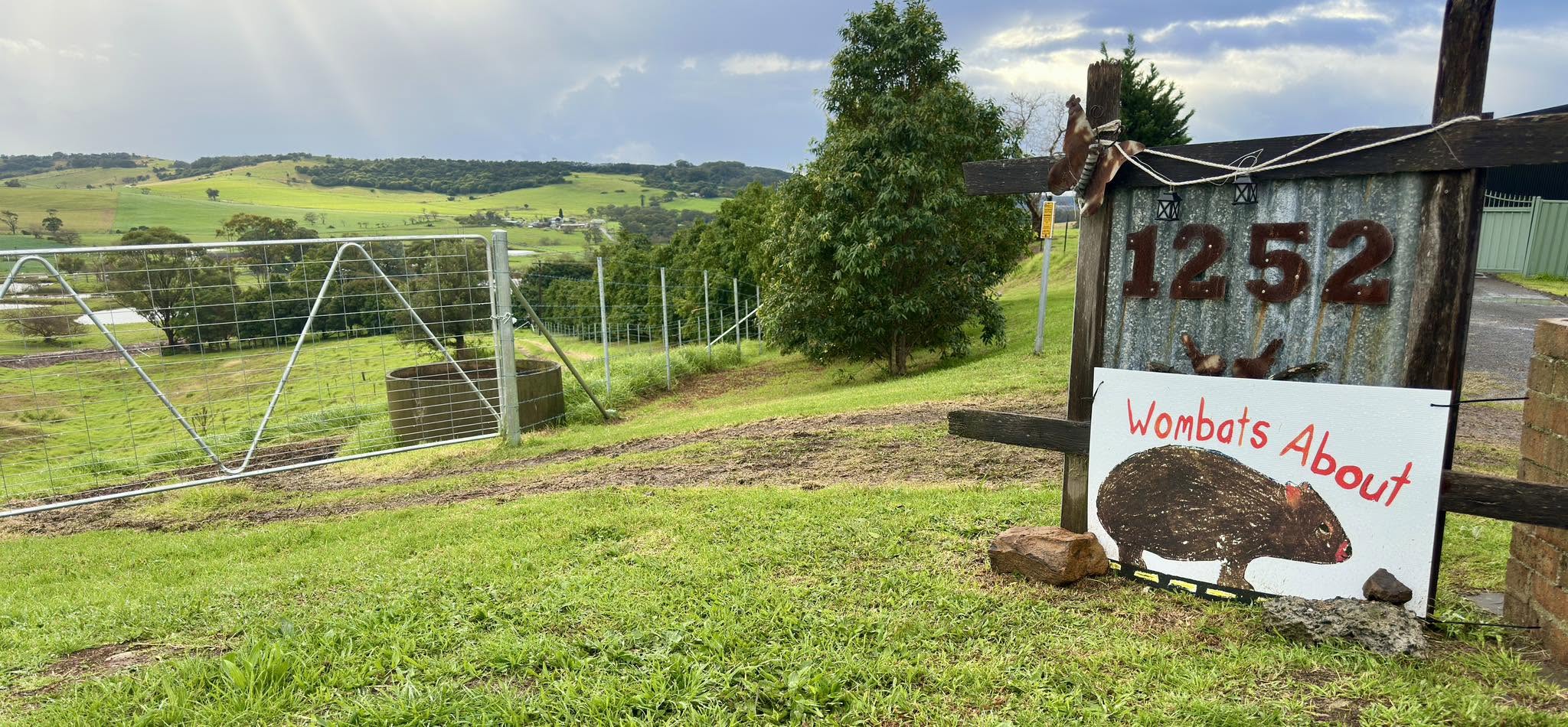
The awareness campaign in full swing
“He was severely compromised,” says Hugh. “Poor old Spike was just overloaded. He saw two different vets. We always like to thank our vets, and we’re grateful for their help.”
Although the ticks were removed with the help of medication, Spike lost his three-week struggle to survive.
“He was severely under the weather. Sad.”

Asked what echidnas’ personalities were like, Hugh, known to have a kind word for all manner of snakes and reptiles, is momentarily lost for words.
From June through to September, the male short-beaked echidna becomes noticeably more active. Males emerge from their solitary routines to track females by scent, often forming “echidna trains”: orderly processions of up to ten hopeful suitors following a single female for days or even weeks. It all ends when the female signals she’s ready and the strongest male wins the right to mate.
“Echidnas are outstanding and complex monotremes. They’re cute. These quirky, resilient little animals have been wandering Australian landscapes for millions of years – long before humans arrived – and remain one of the wonders of this area.
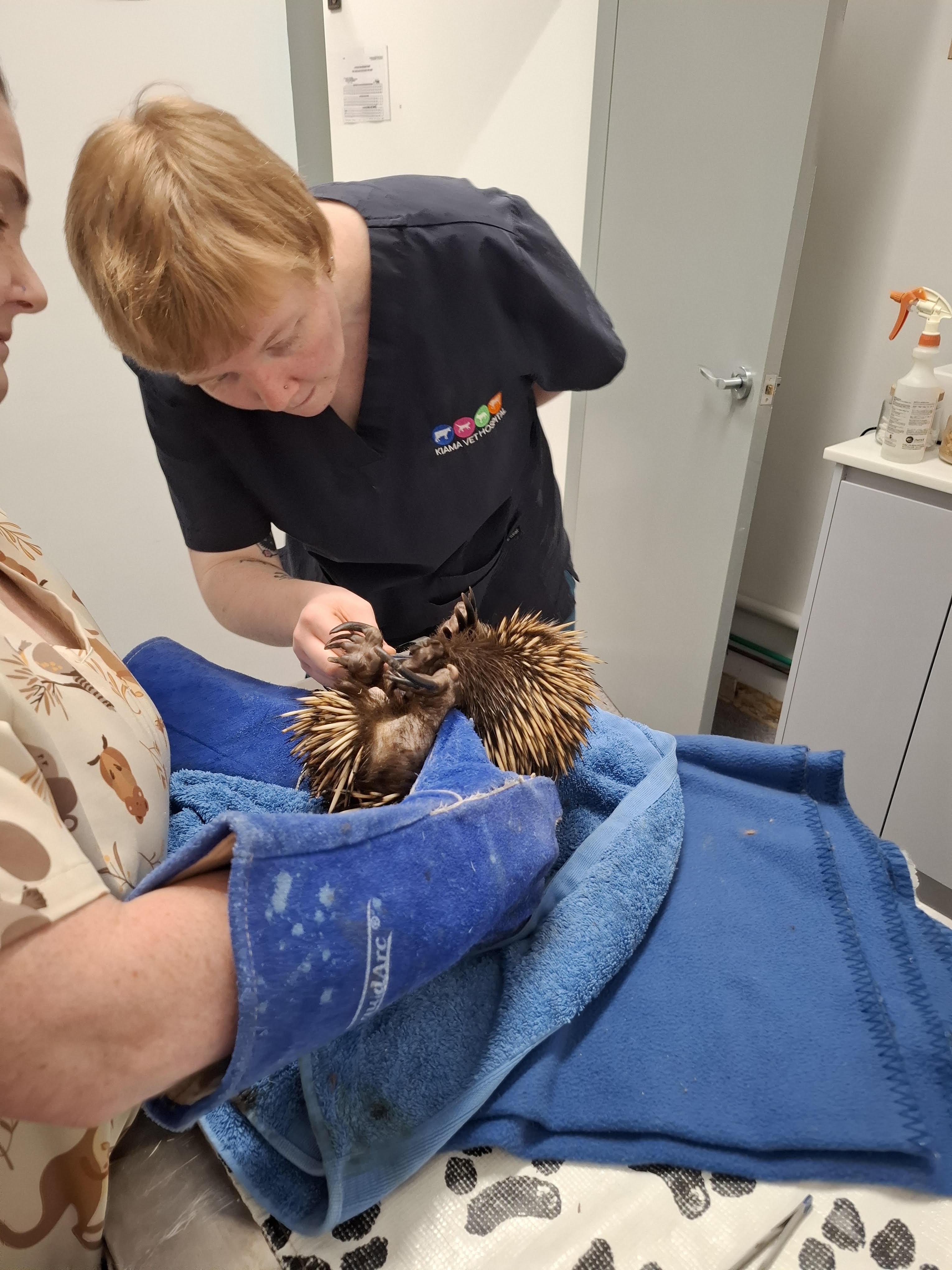
Spike
“Echidnas are true originals – one of only two groups of monotremes (egg-laying mammals) left on Earth, alongside the platypus.”

“Echidnas turn up in gardens and at times indoors,” Hugh says. “Please be aware. If these spiky residents are spotted crossing roads, be mindful. They mooch around looking for food: ants and termites.
“Road trauma and dogs pose issues for them. If you have one turning up in your garden, remove dogs if possible. They will move on if given the opportunity.”
After mating, the female develops a temporary pouch and lays a single soft, leathery egg about three weeks later. She incubates it for roughly 10 days until a tiny, jellybean-sized ‘puggle’ hatches.
The newborn stays protected in the pouch for several weeks, feeding on milk that oozes from special pores rather than teats. Once spines start to develop, Mum moves the puggle to a safe nursery burrow and continues visiting to nurse it for months.
Spike might not have made it, but he has plenty of love-addled cousins out there. Try not to run one over.